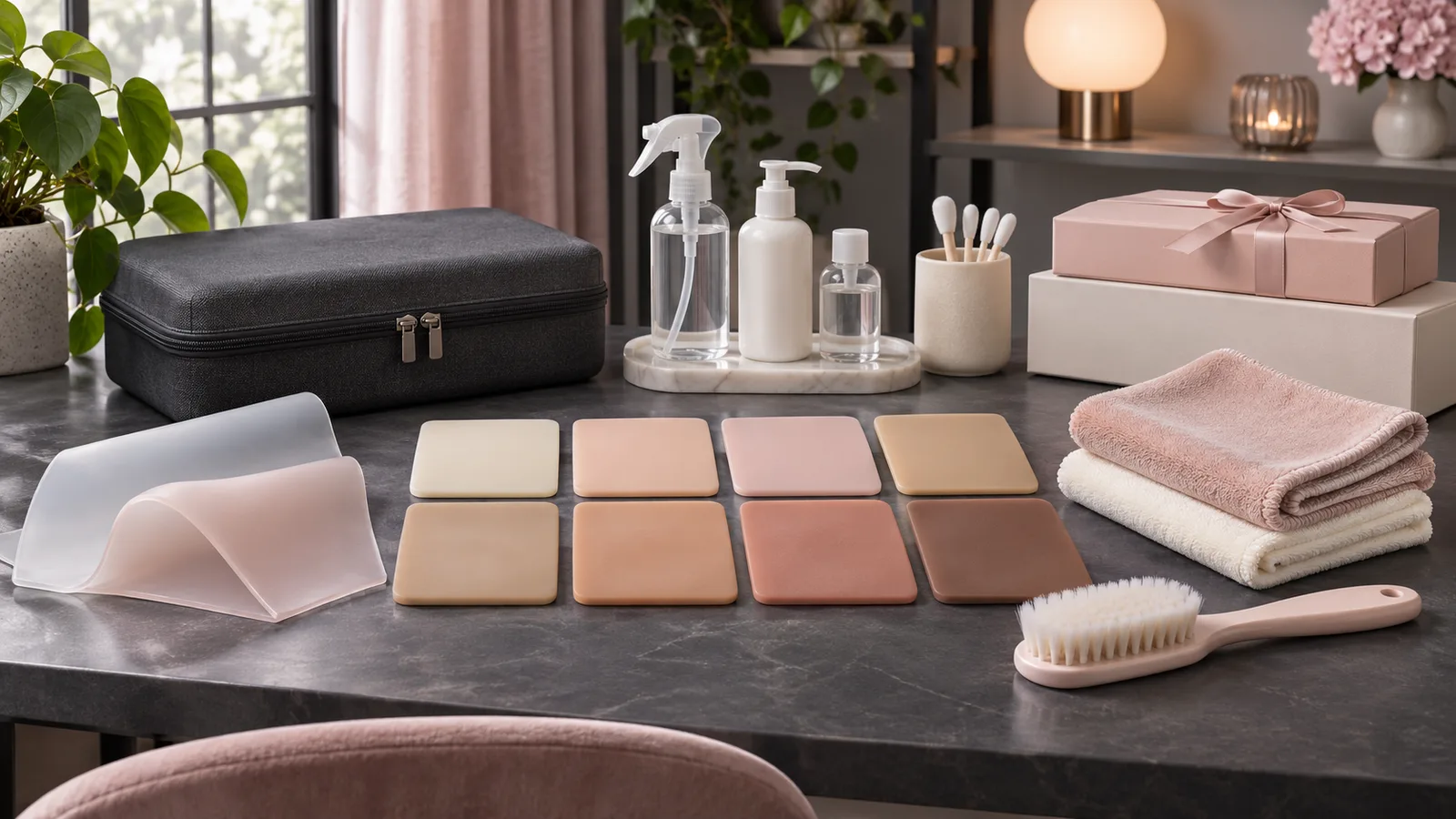
Choosing between TPE and silicone is less about finding a universally better material and more about deciding which tradeoffs fit your budget, handling preferences, and willingness to perform routine care.
The practical difference
TPE is usually softer and more elastic. It is often chosen by buyers who prioritize a pliable feel and lower initial price. Silicone is generally less porous, holds fine sculpted detail well, and may tolerate careful handling with less surface tack. These are broad tendencies, not guarantees, so ask for the exact care instructions and warranty terms.
Cleaning and drying
TPE can require more attention to complete drying because moisture may remain in folds or openings. Silicone is typically easier to wipe clean, but seams, textured areas, and internal cavities still need careful drying. Neither material should be stored damp.
Use only cleaners and powders approved by the manufacturer. Strong solvents, unknown oils, high heat, and abrasive scrubbing can damage either surface.
Staining, repairs, and weight
Dark dyes can transfer to both materials. Wash new clothing separately, prefer light colors for long wear, and test fabric on a sample piece when possible. TPE repair products and silicone adhesives are not interchangeable. Check whether the seller supplies written instructions, repair kits, replacement parts, or a repair service.
Full-size models can also be difficult for one person to lift safely. Check the listed weight, measure the route from delivery to storage, and decide where routine cleaning will happen before ordering.
A simple decision rule
Choose TPE when softness and price lead your priorities and you accept a deliberate maintenance routine. Consider silicone when surface detail, less porous construction, and easier wipe-down care matter more than the typical price difference. Compare the specific model and seller support, not only the material label.